Ferrari Luce Interior: Jony Ive’s LoveFrom Human Interface Design
10 November 2026
Ferrari Luce interior design is shaped by LoveFrom, the studio founded by Jony Ive, whose work defined decades of product design at Apple. The interior is built around tactility, clarity, and intuitive interaction, applying a restrained and material-led design philosophy to the driving environment.
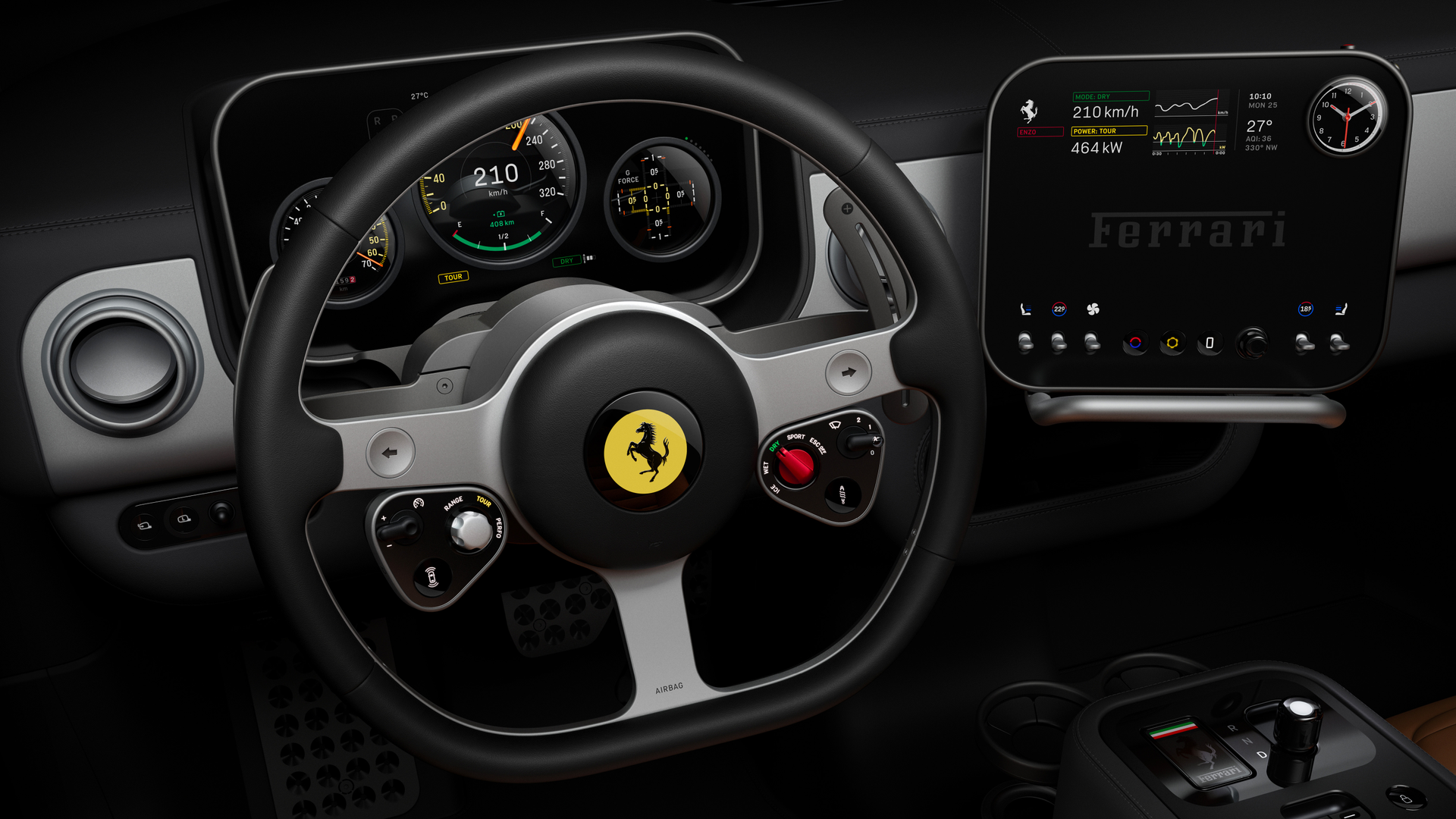
Rather than relying on large touchscreens, the Ferrari Luce prioritises mechanical controls that invite physical engagement. Each interaction is designed to be simple, direct, and satisfying, reinforcing the connection between driver and car. Inspired by classic Ferrari sports cars and Formula One single seaters, the interface is clearly organised and reduced to essential functions.


Ferrari Luce Interior Human Interface: Designed Around Touch
At the core of the Ferrari Luce interior is a design approach that values direct, physical interaction. Many of the primary controls are mechanical, engineered to feel intuitive and rewarding. This choice challenges the convention that electric vehicles must be dominated by large touchscreen interfaces.
The system is structured to keep functions clear and accessible, with an emphasis on making interaction simpler and more direct.
Ferrari Luce Interior Steering Wheel: Heritage Reinterpreted
The steering wheel design pays homage to Ferrari heritage while introducing modern manufacturing and material decisions. It adopts a simplified three-spoke form, reinterpreting the iconic wooden Nardi wheels of the 1950s and 1960s.
The spokes feature an exposed aluminium structure designed to showcase strength and surface finish. Ferrari specifies that the steering wheel uses 100% recycled aluminium, developed specifically for the Ferrari Luce to achieve mechanical resistance and a high-quality anodised finish.
Built from 19 CNC-machined parts, the steering wheel is also engineered for weight reduction, weighing 400 grams less than a standard Ferrari steering wheel.


Two Analogue Control Modules
Controls are arranged into two analogue control modules, reinforcing both clarity and functionality. This layout is directly inspired by Formula One single seaters, with button development focused on the balance between mechanical and acoustic feedback.
Ferrari notes that each button was developed through more than 20 evaluation tests with Ferrari test drivers, refining the tactile and sound response of every interaction.
Ferrari Luce Interior Key and Key Dock: A Designed Starting Ritual
Starting the Ferrari Luce is framed as a theatrical and memorable sequence, echoing Ferrari’s tradition of turning ignition into a moment of anticipation.
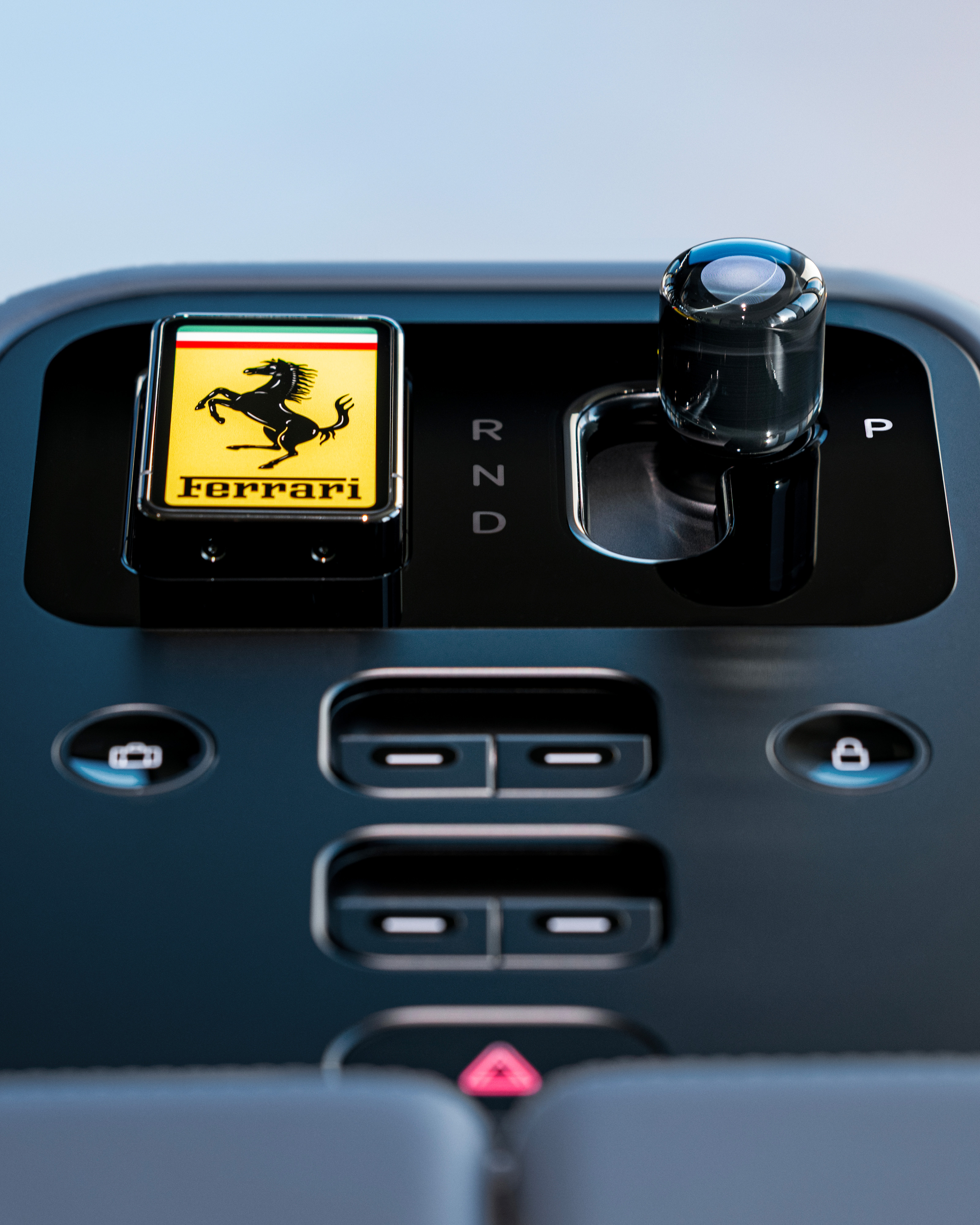
The ritual begins with the key itself — a tactile object made from Corning® Gorilla® Glass, engineered for durability, scratch resistance, and optical performance.
An Automotive First: E Ink Display Technology
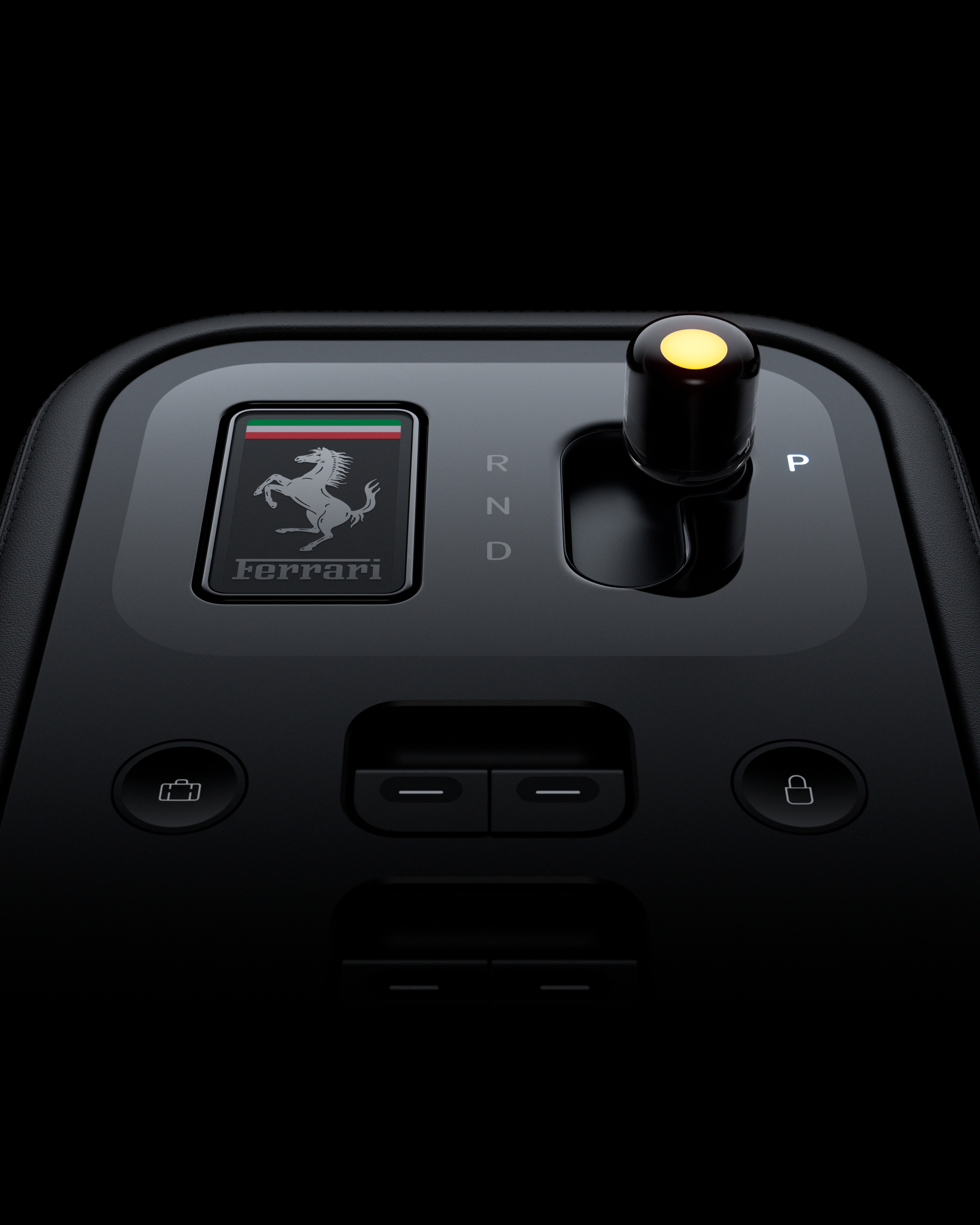
The Ferrari Luce key incorporates a specially developed E Ink display, described as an automotive first. The display only uses power during colour changes, due to its bi-stable properties.
When the key is inserted into its dock on the central console, the sequence is choreographed with visual precision: the key shifts from yellow to black, integrating with the glass surface of the console. At the same moment, the control panel and binnacle illuminate, signalling the transition from stillness to motion.
Ferrari Luce Interior Displays: Three Screens With Defined Purpose
The Ferrari Luce features three displays:
Driver binnacle
Central control panel
Rear control panel
Their design is centred on clarity, legibility, and deliberate organisation. Significant attention was placed on the relationship between inputs (controls) and outputs (displays), ensuring the user experience remains intuitive.
A new custom typeface reinforces the identity of the interface, informed by historic Ferrari type and Italian engineering lettering.

Ferrari Luce Interior Binnacle: OLED Depth and Column-Mounted Innovation
The binnacle moves with the steering wheel, optimising the driver’s view and supporting performance. Ferrari describes the steering-column-mounted instrument cluster as a first for a range Ferrari.
It features two overlapping OLED displays, designed to deliver crisp graphics, vibrant colours, and infinite contrast. Digital and analogue elements are merged into a self-contained unit attached directly to the steering column, moving in sync with rake and reach adjustments.
Ultra-Thin OLED With Three Cutouts
The binnacle’s development required collaboration with Samsung Display, resulting in an ultra-light, ultra-thin OLED panel featuring a world-first design element: three large cutouts that reveal information from a second display behind the top panel.
Each opening is protected by a clear glass lens, enhancing the sense of depth. The cutouts are surrounded by anodised aluminium rings, echoing the structural styling of the binnacle frame.
Ferrari Luce Interior Control Panel: Shared Orientation and Ergonomic Detail
The central control panel is mounted on a ball-and-socket joint, allowing it to be oriented toward either the driver or passenger. This is described as a unique feature intended to enhance and share the Ferrari experience.


Ergonomic details extend to a palm rest for operating the panel, enabling interaction without requiring the user to look down. This reflects the design team’s focus on making complex functions feel simple and natural.
Ferrari Luce Interior Multigraph: Micro-Engineering at the Centre
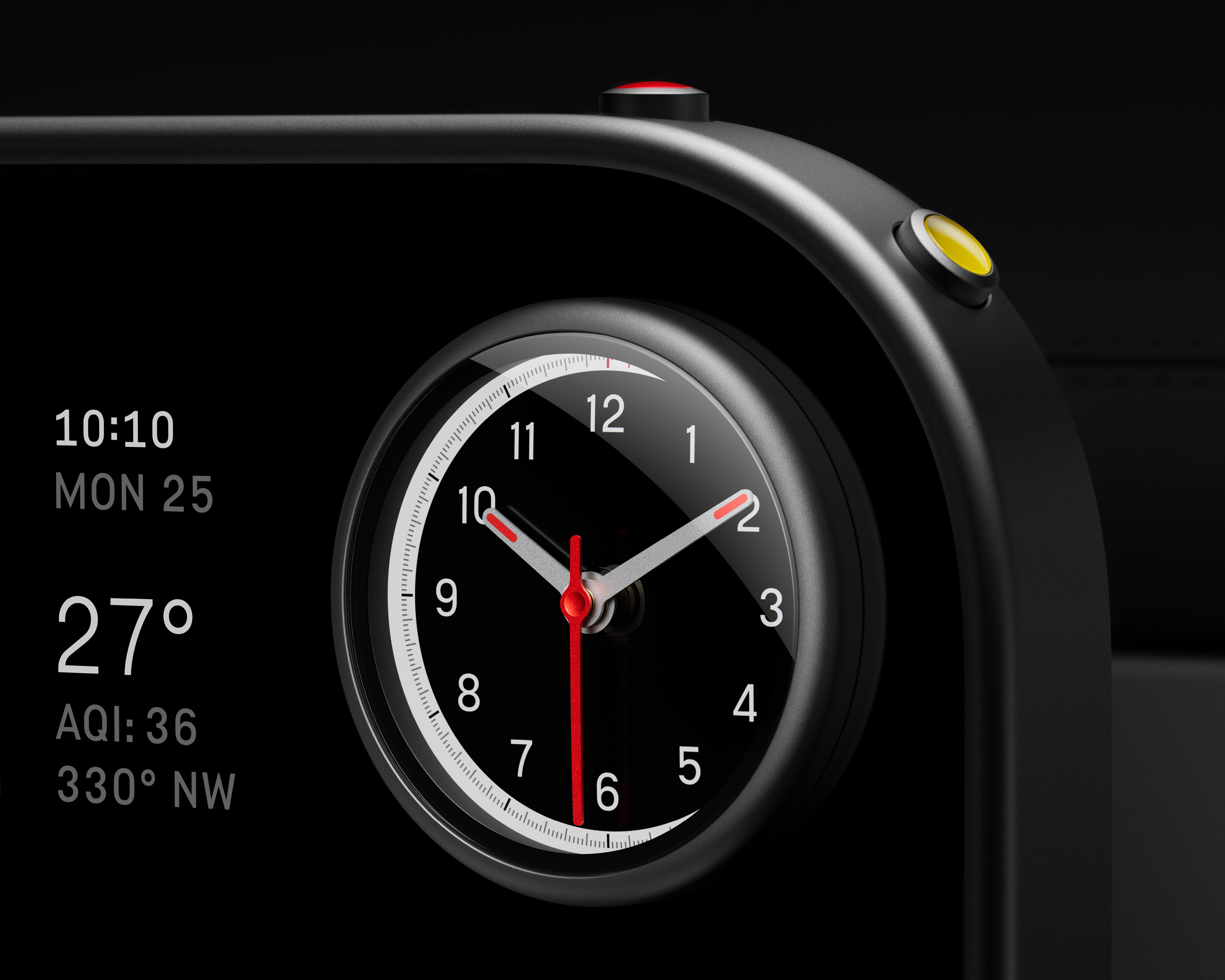
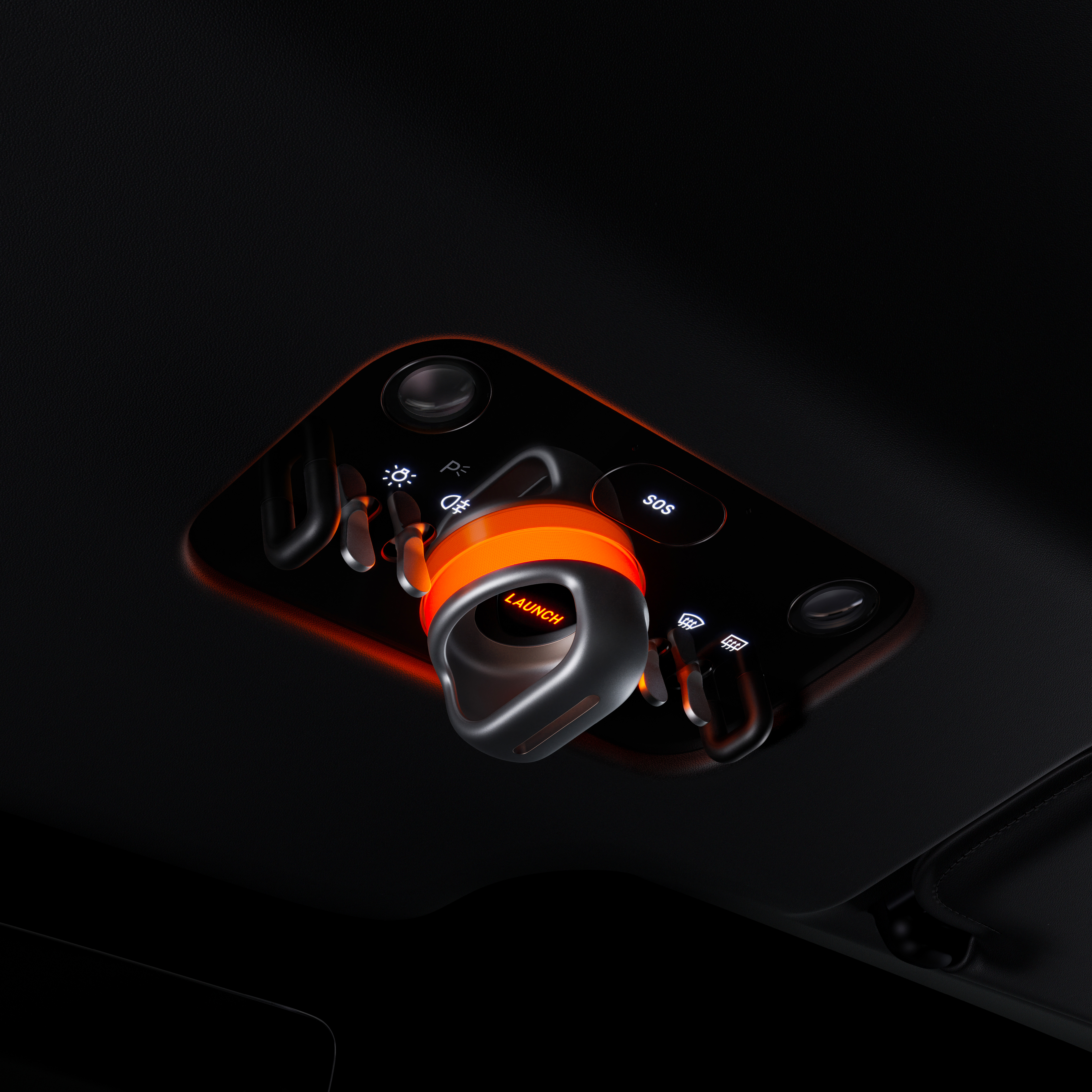
Integrated into the central display is the multigraph, described as a symbol of precision and innovation. It features a proprietary movement with three independent motors, enabling the hands to move autonomously.
Three anodised aluminium hands glide over a minimalist dial protected by Corning® Gorilla® Glass. The multigraph includes four modes:
Clock
Chronograph
Compass
Launch control
Animated transitions are designed to evoke the character of high-end chronographs, blending watchmaking-inspired artistry with electronic control.

Ferrari Luce Interior Instrument Cluster: Aviation Clarity Meets Ferrari Heritage
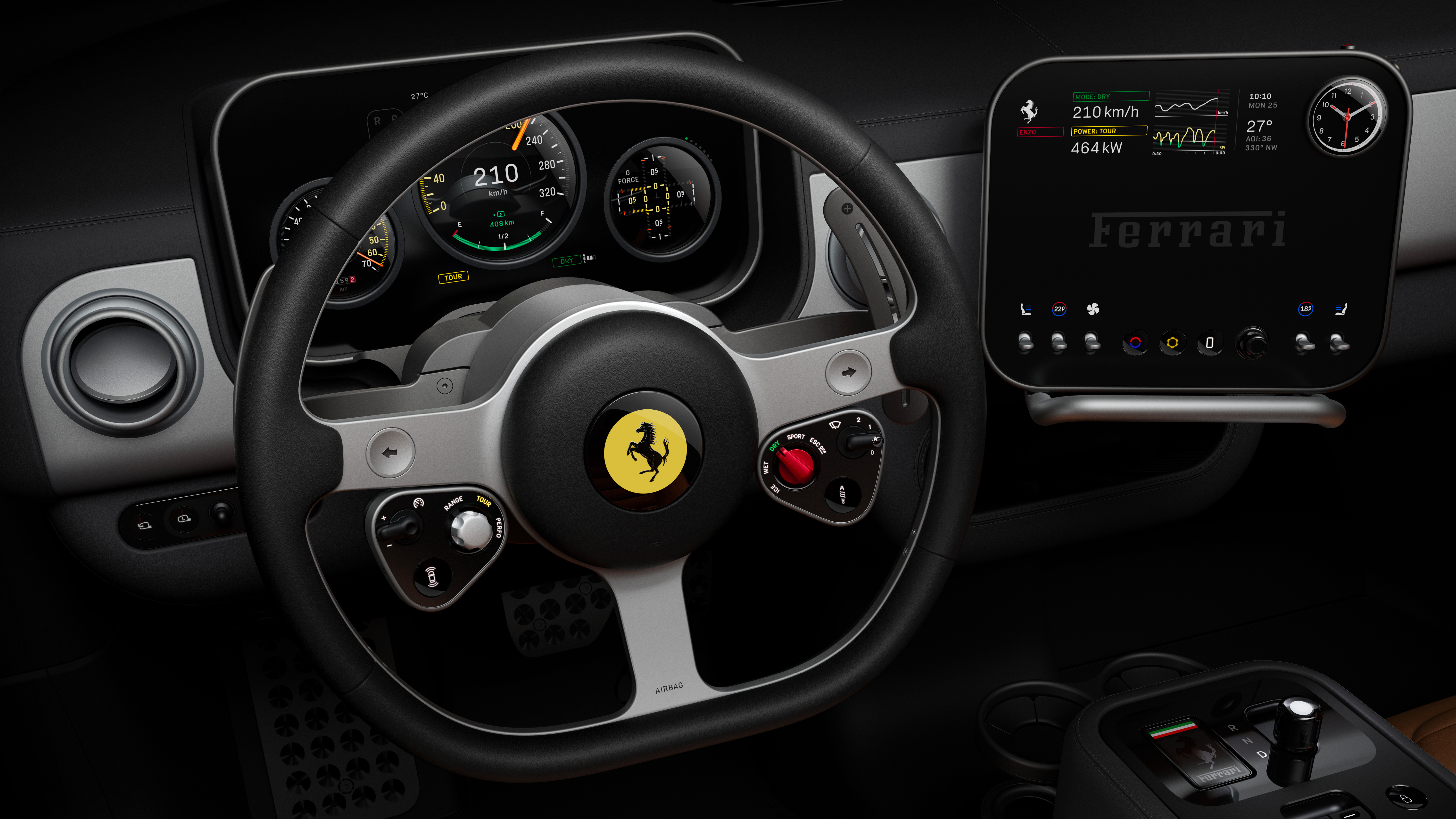
The Ferrari Luce graphics draw inspiration from historic automotive cues and aviation display logic, particularly helicopters and aircraft. The displays are designed to resemble analogue gauges while remaining fully digital beneath the surface.
Ferrari references Veglia and Jaeger instruments from the 1950s and 1960s, aiming for watch-like clarity and a clean layout prioritising legibility.
This approach is described as being rooted in reducing cognitive load. By echoing the simplicity of analogue watch dials — where information can be understood at a glance — the designers aimed to make driving data equally immediate and intuitive.
Ferrari Luce Interior Shifter: Gorilla® Glass and Laser Precision
The shifter is described as a technical work of art made from Corning® Gorilla® Glass, using glass manufacturing processes that have not previously been incorporated into automotive interior design.
To achieve Ferrari’s required precision, lasers were used to create tiny holes in the glass — half the width of a human hair — enabling ink deposition for graphics with uniform accuracy.
Gorilla® Glass is also used across multiple interior surfaces, including the control panel, binnacle, and central console, selected for its surface durability and resistance to impact and scratches.
More To Drive from Posh Paper 360
The New Audi RS5 Plug In Hybrid Delivers High Performance and Efficiency
The New Mercedes-Benz S-Class Sets a New Standard in Luxury and Innovation
Return of the King: The Bugatti FKP Hommage and the Resurrection of the Hyper GT

The Future is Lighter: Formula 1 Unveils the 2026 Evolution

The Ice King: Bentley’s Flying Spur Claims a New Arctic Record